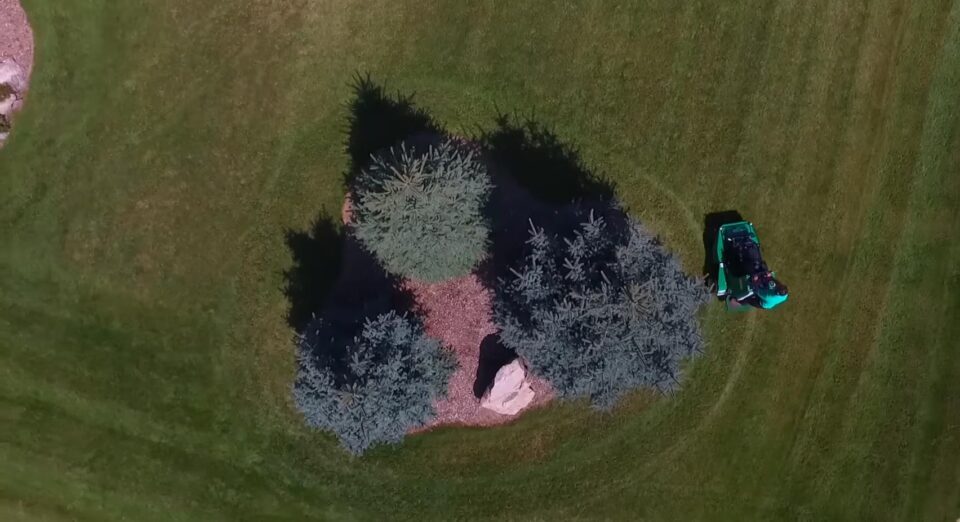
Professional lawn care workers and landscapers often need to work in or near high-traffic areas. Whether parking on the street in residential areas or working around pedestrian walkways on a campus, your team needs to know how to stay safe near busy roadways, how to keep pedestrians and bystanders safe, and how to prevent property damage.
Prioritize Safety Training and Culture
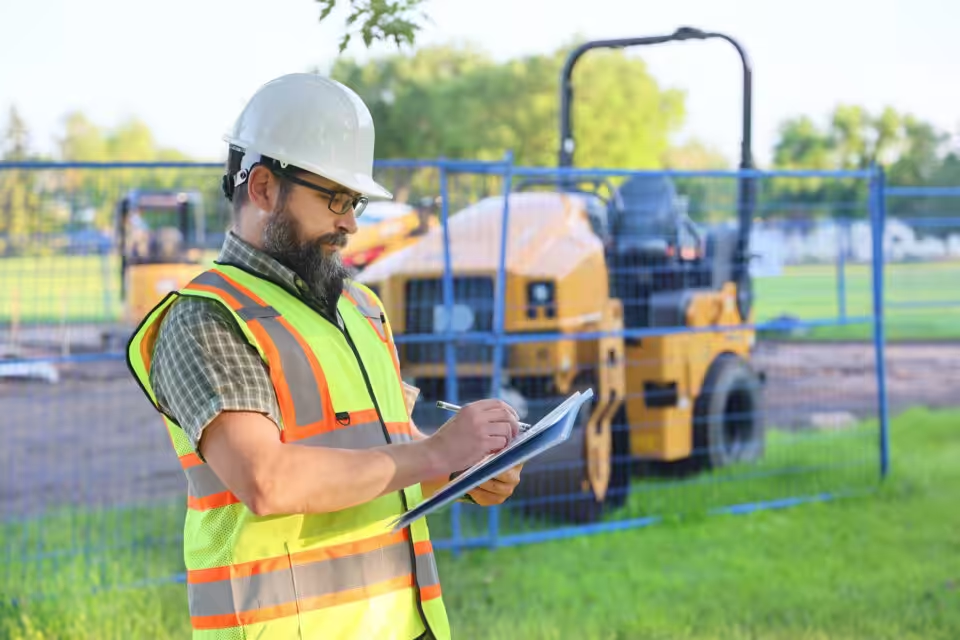
Maintaining safe jobsites protects workers, bystanders, your company’s image, and company profits. To create a culture of continuing safety, encourage crew leads to model safe working practices and to correct unsafe behaviors immediately. If you need to hire people without prior lawn and landscaping experience, consider implementing a probationary period with supervised equipment use.
Safety training should happen for all new hires and on an ongoing basis to keep everyone on the same page. One way to do this is with weekly “tailgate talks” on rotating topics (e.g., safe trailer loading and unloading, PPE use, bystander safety, etc.). Keep these meetings short, and make sure there is time for employees to ask questions at the end.
Make sure that employees use the right personal protective equipment (PPE) for each task. In high-traffic environments, this may include high-visibility vests to ensure that nearby drivers see your workers.
Working Near Roads
Practicing defensive parking when positioning trucks and trailers also helps increase safety for crew, equipment, and passersby. Whenever possible, park parallel to traffic flow in a location that is easy for oncoming drivers to see and that is far enough off the road that other vehicles can pass safely.
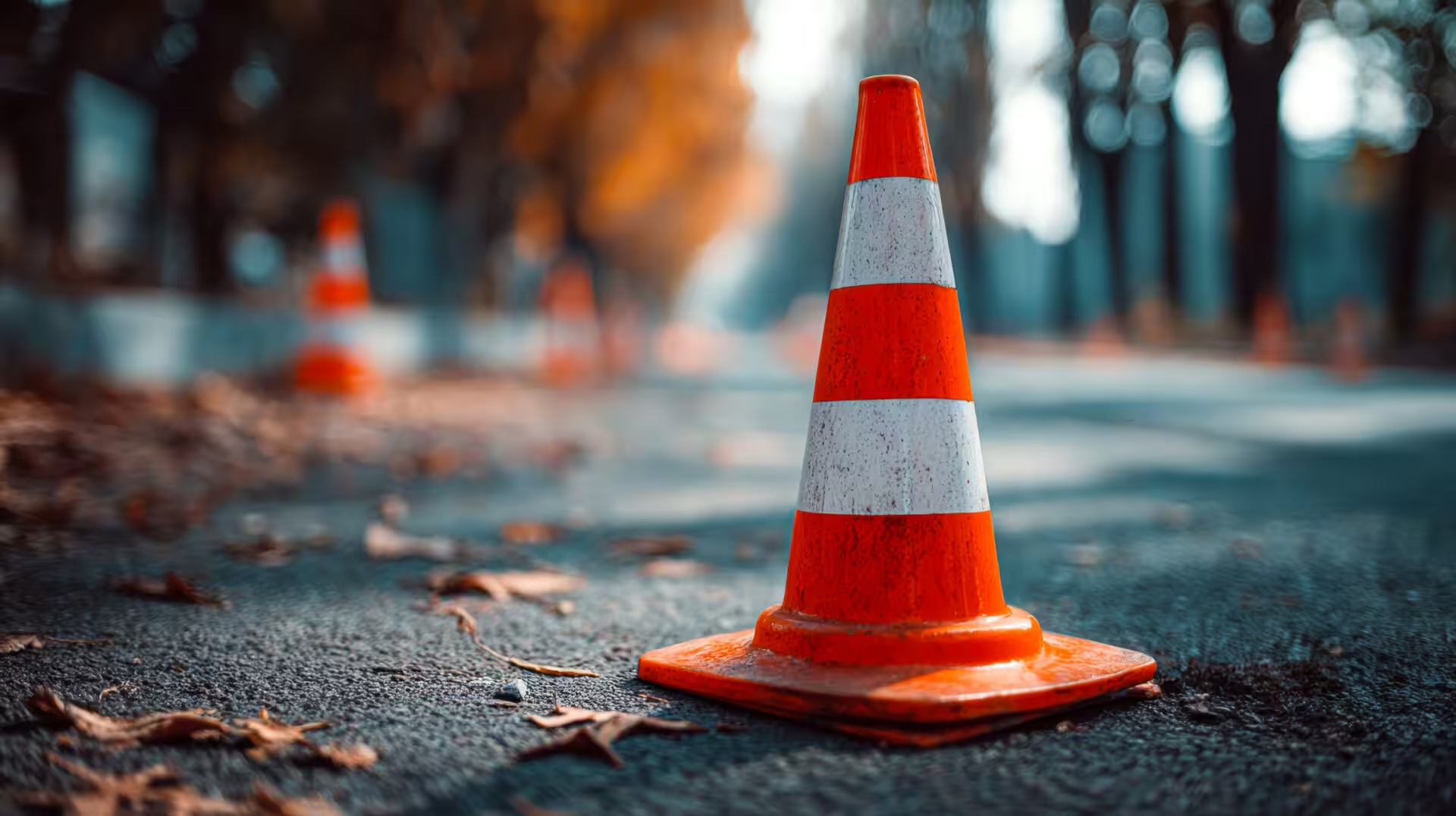
When your crew is working near roadways, you’re required to follow federal standards for signs, signals, and barricades to alert motorists to the presence of workers. Clearly mark the area around your vehicle and work zone with bright cones and signs, and make sure workers wear high-visibility clothing. Crew working near roads should also wear hard hats and eye protection.
In some situations, you may need to use flaggers to safely control the flow of traffic. Flagger training regulations vary by state; visit workzonesafety.org for more information. Review traffic regulations and guidelines regularly, and include them in ongoing safety training. Check federal, state, and local regulations for each situation and reference the Federal Highway Administration Manual on Uniform Traffic Control Devices (MUTCD).
Working Around Public Projects
Summer is a super busy season for lawn and landscape workers, and it’s also a peak season for public work like utility repairs, redoing roads, and repairing sidewalks. That work can tear up surrounding landscapes, leaving your crews with more work. It can also cause issues for crews trying to do their jobs when roads are blocked and traffic and pedestrians get redirected.
Green industry pros should stay up to date on planned projects in their work areas. You’ll need a plan for how projects may affect your crews’ access to work sites. Closed roads might change your routes or mean that your crews need to park trucks in different locations than usual. The work might also impact irrigation, drainage, and turf nearby, and result in repair work for your lawn and landscape crews.
The damage to properties and public green spaces that can result from construction projects also presents an opportunity to market landscaping services to municipalities and property managers. If your company is looking for more work, keep that in mind for your marketing efforts.
Keeping Bystanders Safe
Ideally, there won’t be any bystanders or pedestrians near the worksite. Cones and signage clearly designating the work area will help keep people away. However, there is always the possibility of someone walking on a sidewalk that you weren’t able to close or wandering into the worksite.
Train crews to watch for people in the work area. Always check behind you before reversing riding equipment. Instruct residential clients to keep children indoors while your crews are working, if there are children in the home. If a child or pet approaches, turn off the equipment and wait for blades to stop completely. Children can be burned if they touch equipment even after it’s turned off, so stay vigilant about equipment not in use as well.
Another major danger for bystanders comes from debris thrown up by lawn equipment. Minimize this risk by inspecting the work area for sticks, glass, metal, wire, stones, string, and other objects that could damage equipment or hurt bystanders and crew.
Protecting Customer Property
Thrown debris can also damage customer property. A flying rock, chunk of wood, metal nail, or other debris can scratch, dent, or otherwise damage house siding, nearby cars, and other property. Thorough inspection of the worksite before beginning will help prevent this type of accident.
Trimmers, edgers, and mowers are typically equipped with safety features like guards, debris shields, and/or clippings shoots to help control weeds, grass, and debris. Make sure that crews know not to remove or tamper with these safety features and to regularly inspect them to make sure they’re not damaged. If equipment does strike an object, immediately shut down the equipment and check for damage.
Local Dealer Support
Your local lawn equipment dealership is here to support you and your crew’s commitment to safe equipment use. In addition to quality products and competitive pricing, dealers offer expert knowledge, personalized service, and after-sales support that you can’t get in a big-box store.
Here at Richardson Saw, we do several operator training sessions every year with large companies. These training sessions include topics such as how to properly use the equipment and what to look for each day to get ahead of any problems that might occur. Stop by or contact us to learn more.