When you invest in top-quality commercial lawn equipment, you expect that equipment to last. Commercial lawn equipment is manufactured with high-quality materials and designed to stand up to the rigours of professional landscaping and lawn care.
Buying a quality brand from a reputable dealer is a first step toward keeping your lawn equipment running reliably for years. But you also have a great deal of control over how long your equipment lasts.
Regular maintenance, daily and weekly inspections, and training your crew on how to use power equipment all extend the life of your equipment. On the other hand, there are several common mistakes that can shorten the life of your lawn equipment. Here are five of those mistakes to avoid, and what to do instead.

1) Running With Damaged Mower Blades
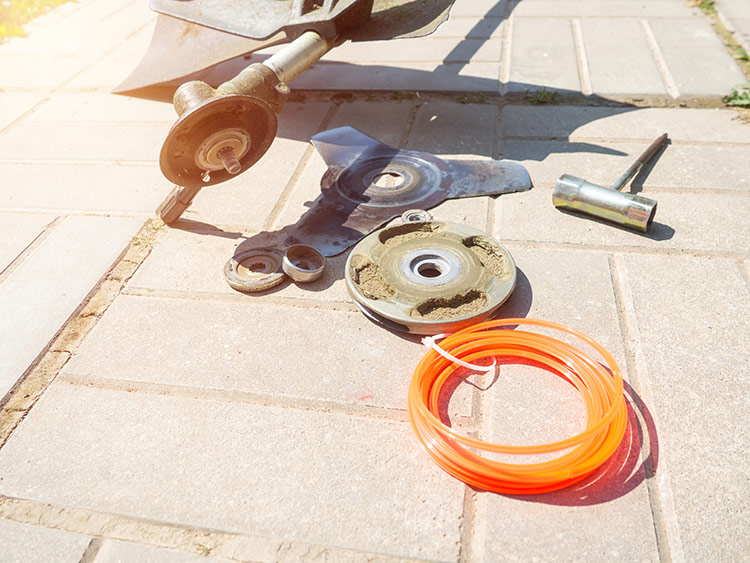
Running a mower with dull blades makes the engine work harder, and the grass look less tidy after cutting. Dull blades tear and rip grass instead of cutting it cleanly. That’s not healthy for the grass, and it’s not easy on the mower either.
Damaged blades also cause balance issues. When your mower is running, blades spin at super high speeds, and imbalanced blades can destroy the bearings on the blade’s spindle. Replacing bearings and blades is much more expensive than simply sharpening blades when they get dull and replacing them if they are damaged.
2) Ignoring The Air Filters
Keeping your air filters clean is one of the best things you can do to extend the life of gasoline-powered equipment. Clean or change air filters regularly to keep air flowing through the engine. You’ll need to be especially vigilant during dry seasons since dust stirred up when working in drought conditions clogs the filters faster.
For blowers and hedge trimmers, make sure you also check the spark arrestors. Plugged spark arrestors can be caused by stale fuel, clogged air filters, and not running the equipment at full throttle often enough for hot air to burn off carbon buildup.
3) Improper Fueling Practices
Fuel that contains ethanol goes stale after about 30 days. Stale fuel will gum up your carburetor. Sometimes you can clean the carburetor, but in many cases you’d need to replace the whole thing. You can prevent issues by using up ethanol-containing fuel within 30 days of purchase or adding a fuel stabilizer.
Make sure you always store gasoline in approved containers and away from ignition sources, including prolonged exposure to direct sunlight during the hot summers. When you’re storing equipment, make sure you add fuel stabilizer, drain the fuel, or fill the equipment with fuel that does not contain any ethanol.

4) Skipping Daily Inspections
Daily and weekly checks help maximize uptime by keeping your equipment running well. With regular checks, you’re much more likely to catch potential issues before they become costly problems. It’s much better, for example, to replace a drive belt when it’s cracked than to wait for it to break while the mower is running and have that mower out of commission until you can perform maintenance.
Establish a daily checklist for your crew to go over. For lawnmowers, that checklist can include checking for loose bolts, faulty electrical connections, cracked components, or leaking hoses. Weekly maintenance can include checking the drive belt, blades, and air filter, and greasing any lubrication points as needed.
5) Ignoring Routine Maintenance
In addition to keeping air filters clean, there are some other routine maintenance tasks that are important for extending the life of your lawn equipment. When you keep up with routine maintenance, you can often prevent more costly and time-consuming repairs down the road.
Some routine maintenance is specific to different types of equipment, so always check your owner’s manual for recommended maintenance schedules. For example, you don’t want to skip hydro transmission maintenance. Zero-turn mowers often have this type of transmission. Replacing them is very expensive, but if you change out the filters and fluids following the manufacturer’s recommendation, you’ll extend the life of your mowers.
Bonus Tip: Storing Batteries Incorrectly
If you’ve started using battery-powered equipment in your lawn care or landscaping business, you know that it requires different maintenance than gasoline-powered equipment. You’ll still need to keep the equipment clean and replace cutting parts, but there is no engine to maintain. That makes maintenance much simpler for battery-powered equipment.
The main thing you need to pay attention to with battery-powered equipment is how you store and charge the batteries. Make sure your crews know not to drain batteries completely. They will last much longer if you take them off the tools and recharge them before they die. Also, be careful not to overcharge batteries. They should be removed from the charger once they have finished charging.
For storage, batteries will last longer if you store them when they’re partly charged rather than either drained or fully charged. Batteries should be stored in locations where they won’t get too hot or too cold (recommended temperature range depends on the battery; check your owner’s manual). Protect the batteries from moisture. When transporting batteries, pack them snugly rather than loose in a larger container where they can rattle around.
Visit Richardson Saw Today
Richardson Saw & Lawnmower is your local Dallas-Fort Worth area dealer for top-quality commercial lawn equipment. We carry well-known brands like STIHL, SCAG, EGO, and ECHO that deliver the reliable performance you need for your business. We always service what we sell, and having one of the largest parts inventories in North Texas helps us provide fast turnaround when your equipment needs maintenance or repairs. Stop by if you’re shopping for new equipment, need parts for in-house maintenance, or need quick and reliable repairs.