Gasoline-powered equipment has been the standard for commercial lawn and landscaping for so long that it once seemed impossible for battery-powered equipment to displace it. Now, though, there’s a growing role for battery-powered equipment in the lawn and landscape industry.
Modern lithium-ion battery-powered equipment is reliable enough and powerful enough to tackle professional lawn and landscaping work. Advances in battery-powered technology, coupled with a growing push to phase out gasoline-powered small engines, make incorporating battery-powered equipment into a commercial fleet more and more appealing.
As more states, cities, and HOAs ban or restrict gasoline-powered equipment use, battery-powered equipment will become even more essential for the modern green industry. Even without bans, though, there are several benefits to including battery-powered equipment in your commercial fleet. Depending on your location, you might even be able to take advantage of incentives like rebate programs to get discounted battery-powered equipment.
Battery-Powered Incentives for Texans
Here in Texas, there is no statewide ban on gasoline-powered small engines. There might be some restrictions in specific cities or from HOAs, but for the most part, whether or not you use battery-powered or gasoline-powered equipment is entirely your choice. However, there are incentives or rebates available in Texas for electric equipment adoption.
Dallas, Denton, and Austin all offer discounts or rebates on purchases of electric-powered lawn equipment. The goal is to prompt a shift away from gasoline-powered equipment without outright banning its sale. The move to incentivize purchasing battery-powered equipment rather than banning the sale of gasoline-powered equipment puts green industry pros in a good position. It makes it easier to purchase battery-powered equipment, which often has a higher price point than comparable gasoline models, but there’s no penalty for those who still want or need to use gasoline-powered equipment.
Additionally, you can save money long-term by switching to battery-powered tools. The tools have a higher upfront cost, but you will quickly save on reduced fuel costs. At least, that is true for hand-held tools. The cost-benefit isn’t there yet with larger equipment like battery-powered zero-turn mowers, though you’ll still get other battery-powered perks like simpler maintenance, quieter running, and zero emissions.
The Logistics of Charging in the Field
The rise of battery-powered equipment for commercial applications also means a shift in how commercial crews handle refueling. You can’t just carry extra cans of gasoline or stop by a local gas station when the batteries run down. You’ll need to work out the logistics of recharging battery-powered equipment in the field if you plan to add it to your commercial fleet.
Accurately calculating cordless runtimes, understanding the factors affecting runtime, and implementing strategies to maximize runtime are all essential steps to using battery-powered equipment in your business. You’ll also need to plan on carrying enough extra charged batteries to get through the workday, or have a way of charging batteries on the go.
With more manufacturers of battery-powered equipment marketing to commercial clients, there are several solutions available to meet the charging needs of lawn and landscaping pros. Some manufacturers offer commercial charging docks to simplify charging large numbers of batteries overnight. Many also offer on-the-go charging solutions for rapid charging in the field.
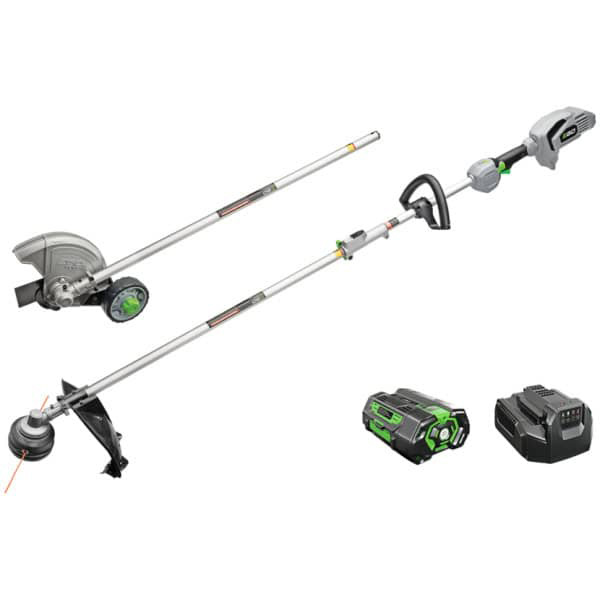
Take EGO, for example, which is one of the biggest names in battery-powered equipment. EGO’s PGX™ Commercial Charging hub scales with your business to charge up to 70 batteries overnight. EGO also offers a portable power bank that charges batteries off-grid faster than you’ll deplete them while working on-site.
Training Commercial Crews for Battery-Power
Switching from gasoline-powered to battery-powered tools is pretty simple. Battery-powered tools are simple to turn on, are typically lightweight, and the controls are easy to use. Using battery-powered tools might even make onboarding new employees easier because there’s a quick learning curve.
That said, you will want to train your crew on how to care for the tools and batteries. There is no engine maintenance with battery-powered tools, but you do still need to keep them clean and regularly clean or replace air filters. Caring for the batteries is the biggest change from gasoline. Make sure you train crews on how much to run down the batteries before charging and what to do to keep the tools running well in hot weather.
If you’re one of the many companies that choose to have both battery-powered and gasoline-powered tools in your fleet, include tips for when to use which tools in your training sessions. Battery-powered tools are ideal for small yards and noise-restricted neighborhoods. Gasoline-powered tools can be better choices for large properties and jobs that require more power.
Making the Switch to Battery Tools
For some crews, switching over entirely to battery-powered equipment might be an immediate goal. There are some advantages to that, such as if you plan to stand out from the competition by offering eco-friendly lawn and landscaping services. For most crews, though, replacing all the tools at once can be prohibitively expensive. Many companies also still find value in gasoline-powered tools, and will benefit from having a mix of battery-powered and gasoline-powered equipment in their fleets.
As a green industry pro, building a relationship with a local dealer ensures you get top-quality tools–both battery-powered and gasoline-powered–when you need them and professional service for your existing equipment fleet. If you’re looking to start incorporating battery-powered equipment into your fleet, we carry commercial-grade battery-powered tools from trusted brands including STIHL, ECHO, and EGO. These tools are designed for lawn and landscaping professionals. You can get the benefits of battery-powered equipment without sacrificing power and performance. Stop by today to check out our selection of battery-powered tools and talk with our equipment experts about which battery-powered tool line will be best for your crew.